
Case study · Vibe Açaí
From white-label supplier to a brand ready for the US shelf
An açaí producer that sold mostly as a white-label supplier wanted its own consumer brand to earn better margins and break into the US. We built a packaging system that told the story of its Amazonian origin, met FDA requirements and cost less to produce.
- Role
- Creative Lead (via Consultoria Motriz)
- Period
- 2019–2021
- Team
- 3 designers and creatives
- Scope
- Packaging system, brand guidelines, website, photography, FDA label adaptation, trade-show and sales materials
- launch through local representatives, with US distributors signed
- US
- product lines in one packaging system, ready for new flavours
- 7
- requirements built into every label from day one
- FDA
- packaging formats chosen by channel to cut production cost
- 3
The challenge
Most of Vibe's business came from supplying açaí to other brands. Its own consumer brand, Vibe Açaí, still looked like a raw ingredient rather than a finished product, and it was built around açaí alone while the range kept growing: milk cream, pitaya, cupuaçu and soursop creams, light açaí and popsicles.
The owner wanted Vibe Açaí on consumer shelves in Brazil and in the United States.
My role
I led a team of three at Motriz and worked directly with the company's owner. Our scope covered packaging, brand assets and guidelines, a new website, social media, photography at the factory, and adapting every label for the US market.
The insight
In the US, Brazilian açaí comes with an origin story. The packaging should sell where it comes from, not just what's inside.
Key decisions
-
Let origin do the selling
The brand's wave pattern draws on the Pará region and Amazonian Indigenous graphic traditions. It signals Brazilian origin at a glance, a strong value cue for American shoppers.
-
A colour system anyone can read
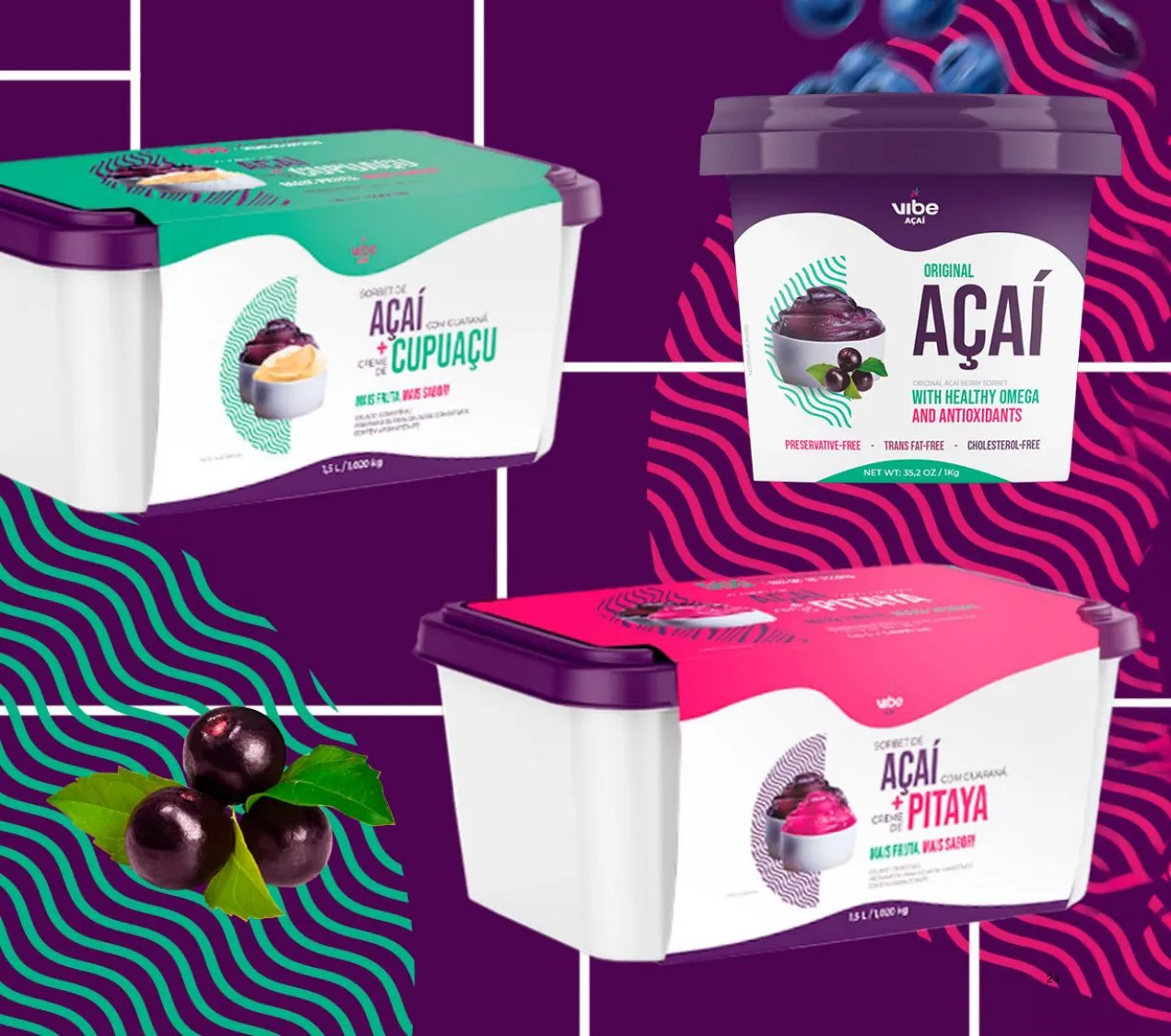
Each flavour owns a colour taken from its fruit: pink for pitaya, a warm off-white for soursop. Cupuaçu was the deliberate exception. It got green instead of white, to avoid confusion with milk cream and to suggest the fruit's acidity. A purple lid holds the range together.
-
Choose the format by channel
High-volume retail tubs use plain, unprinted tubs and lids with a paper sleeve, which made them significantly cheaper to produce. Large tubs and small 150–200 ml cups use in-mold labels.
-
Design for the FDA from day one
Nutrition Facts panels, minimum type sizes, required seals and claims were all built into the system using the FDA's official guidance, so they weren't patched in at the end.
How I led it
-
Owner relationship
I was the main point of contact with the company's owner, from strategy to rollout.
-
Turning a roadblock into a process
In-mold labelling was a production challenge early on. Working with printers and packaging suppliers, we built accurate templates and die-lines that made every new product repeatable.
-
One team, many fronts
I coordinated packaging, web, social and photography so every touchpoint launched with the same identity.
The system
Retail sleeves and in-mold labels · brand guidelines · website · social media · factory photography · trade-show materials · printed kits for door-to-door distributor prospecting in the US
Results
Commercial figures are under NDA.
- Products launched in the US through local representatives, with US distributors signed
- Vibe Açaí reached consumer shelves as a brand in its own right, not just a white-label supplier
- One system covering seven product lines, ready for new flavours
- Full scope delivered within tight client, regulatory and production constraints
What I learned
Constraints are part of the brief. FDA rules, in-mold printing limits and packaging costs didn't hold the design back. They shaped our best decisions.